Steel Ball Run Episode 6 Review: Episode 6 Explains Why Gyro Cannot Treat the Race as a Game
Steel Ball Run Episode 6 review: Gyro's history as an executioner and his attempt to save Marco give his ambition a moral purpose.
Editor-in-Chief: Satya Prasad
Spoiler notice: this article discusses released installment events described by the sources.
The backstory gives Gyro a sharper contradiction: he is trained to serve a harsh system, yet he has entered the race to challenge one sentence the system has already delivered.
The backstory changes the meaning of winning
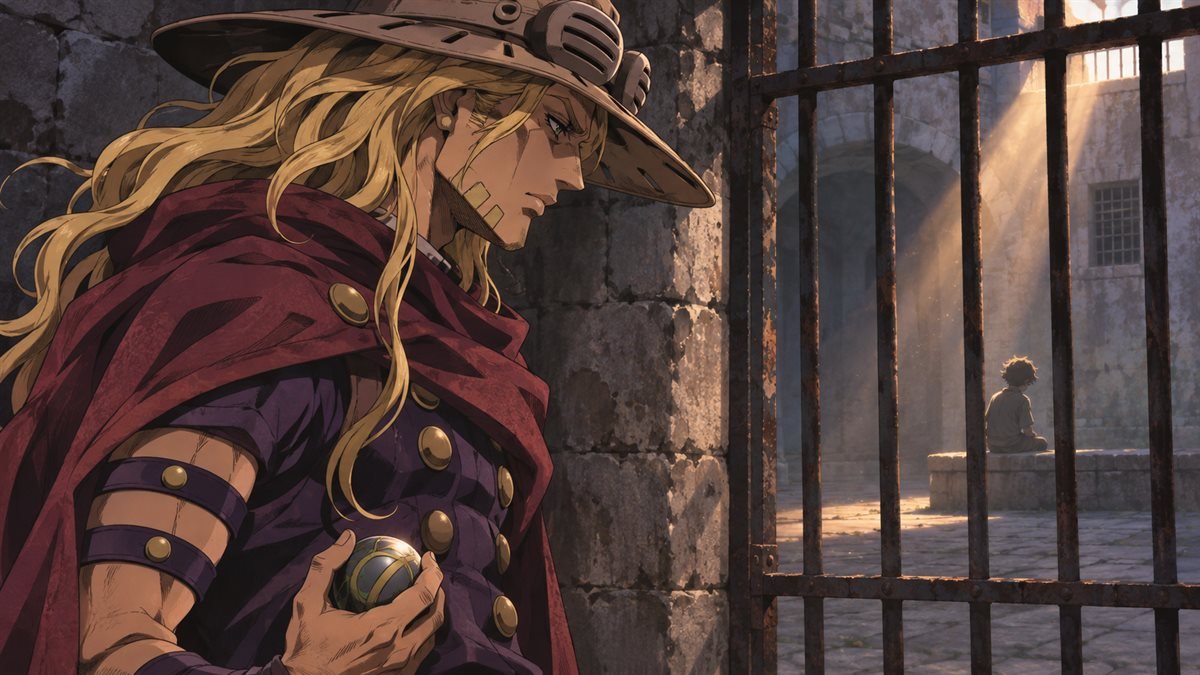
Gyro has been introduced as showman, racer and fighter. Episode 6 adds the part that makes those traits harder to read: he comes from a family tied to executions, and his participation in the Steel Ball Run is connected to a chance to obtain a pardon for Marco, a boy sentenced to die. Suddenly the $50 million prize is not just a flashy incentive. It is a possible way to challenge a decision made by the kingdom's machinery. Gyro's ambition acquires a moral center, though it is not a clean one. He is trained to carry out the very system he wants to bend. That contradiction is far more interesting than revealing that he has a sad past simply to make him sympathetic. His goal also makes the race's money feel less like a fantasy reward. It has a concrete use, attached to a child who cannot bargain for himself. That motive gives the stage a human deadline beneath all of its theatrical competition.
A duty can become a trap
Gyro's father, Gregorio, teaches him the Spin, but the lesson is not only technical. The Zeppeli family has a role in the state, and Gyro has grown up around a strict idea of duty. His work as an executioner makes that duty literal: someone's sentence becomes a task he must perform. The account of his first execution and his hesitation over Marco gives the episode a painful question. What does it mean to be good at a job that makes you complicit in an injustice? Gyro's choice to enter the race is an effort to act within the system while resisting one of its outcomes. It is a narrow path, and the story benefits from not pretending that one act of courage erases the years of obedience behind him.
The present keeps the past from becoming a lecture
The framing in the present matters because the backstory arrives after physical trouble on the trail, including Gyro tending to an injury and the unsettling zombie horse. Those details keep the episode grounded in the race while the flashback gives it a deeper emotional register. The contrast also suits Gyro: in one moment he is improvising to keep moving, and in another we see how he became the man who could survive under pressure. Fan discussion welcomed the long-awaited origin material, though some viewers also noticed the startling body horror at the episode's end. That split response captures the episode's unusual blend. It is sincere about Gyro's history, but it never stops being strange, even grotesque, in the way JoJo often is. The episode's ending reportedly brings that unease back to the surface rather than letting the flashback settle everything. The past informs the present, but it does not protect Gyro from what the race is asking of him now.
An explanation that leaves room for change
Gyro is easier to understand after this episode, but he is not entirely explained. His confidence, irreverence and competitive streak can still irritate or surprise Johnny. The backstory gives those traits context without turning them into symptoms of trauma. He is not racing only because he is noble; he wants to win, and he has lived with a profession that made obedience feel normal. The possibility of helping Marco gives his drive direction, but not certainty. The episode also sharpens the contrast between Gyro and Johnny: one is trying to undo a verdict imposed on another person, while the other hopes to regain something taken from himself. This reading draws on the episode record and audience discussion, rather than a claim of firsthand review.
Research sources and release verification
Research checked . The publisher establishes release facts; independent sources inform the analysis above.
Only the publisher or authorized streaming service controls access, release times and language options.
Open the official installment listing